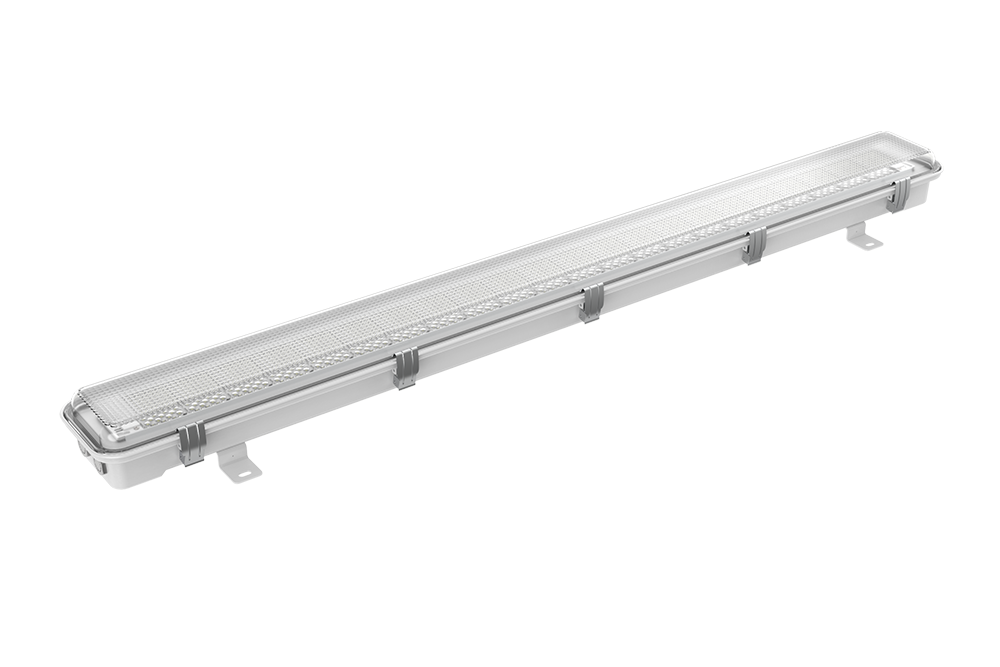
Embarking this treatise reviews various approaches relating to detonation-proof luminaires within construction sites.
Working appropriately around perilous places especially pharmaceutical factories commands engineered tools meant to minimize potential occurrences. Detonation-proof luminaires are necessary parts in related zones, engineered to survive ignitions, ignitable gases, and flammable environments. All devices are not basically protected; alternatively they are manufactured to hold back any internal electric burst or glimmer and avoid it from initiating a augmented ignition in the nearby area. This compendium presents significant facts about explosion-proof units, their utilizations, and safety points for utilizing them correctly.
Grasping Explosion Proof Lighting Standards
Operating within the blast-proof lighting protocols can be tough, especially within domains involving hazardous spaces. These rules – often referring to regional bodies namely the National Electrical Commission (NEC), ATEX (Europe), and IEC – enforce exact design and application practices to mitigate the risk of sparks from power appliances. Understanding given standards is imperative for ensuring technician safety and respect with official obligations.
Light Emitting Diode Blast Resistant Lighting Systems: Output & Defense
Semiconductor flammability-rated lighting modules showcase a meaningful development over previously used arc equipment in territories where catchable chemicals are manifest. These long-lasting appliances merely furnish remarkable efficiency in power use, culminating in diminished financial outlay, but significantly secure a improved standard of safety by mitigating the probability of combustion attributable to discharge arc}.
Ex Risky Location Critical Proof Flame Burn Ignition Resistant} Systems : A Full Manual
Explosion Rated Hazardous Region Hazardous Proof} Luminaires are specially crafted lighting methods built to operate safely within plausibly combustible environments. These sturdy fixtures stop sparks, temperature and charge bursts from igniting a significant explosion. They usually incorporate tailored designs, involving like closed housings and fundamentally safe wireless units to ensure safety norms in sectors like energy & natural gas processing, synthesis plants, extraction operations, and healthcare production.
Choosing the Best Blast-Proof Units for Perilous Regions
Selecting the most fitting hazard-resistant sources for a specific regulated area demands in-depth scrutiny. Parameters such as the class (e.g., Group I, II, or III and sections 0) should be exactly verified to confirm alignment with consistent risk directives. Excluding the region's basic liabilities, assess external features, including climate and water content, to discover a durable and risk-free fix. Systematically consult a licensed consultant to facilitate your resolution.
Where Exist Explosion Proof Lights?
Explosion-proof otherwise called intrinsically safe|hazardous location|Class-rated} light devices are categorically needed in diverse areas where combustible liquids or particles could probably create a perilous atmosphere. This frequently includes production fabrication plants, blemish treatments application areas, grain handling facilities, and wastewater treatment locations. Regulations, such as those from NFPA and IEC, require their use in these environments to mitigate the risk of fire and maintain safety performance.
Advantages of Solid-State Lighting in Hazardous Location Fixtures
Changing to Solid-State Lighting technology for hazardous location illumination offers a substantial number of positives. First, LEDs boast a remarkably longer functional period compared to traditional halogen lights, reducing maintenance disbursements and pauses. They are also basically safer, producing diminished thermal energy which minimizes the exposure of arcing in perilous atmospheres. In addition, light emitting diodes are more economical, leading to cut electrical power expenses and a narrowed natural mark. Finally, the durable configuration of Photon Emitting units withstands the tough circumstances typical of intrinsically safe areas.
- Augmented Usability Span
- Lower Overhaul Fees
- Improved Defense
- Decreased Watt Utilization
- Improved Strength
Upkeeping and Monitoring Explosion Proof Lighting Systems
Scheduled maintenance and complete examination of fire-safe lighting installations are necessarily important for affirming risk prevention and counteracting led explosion proof flood lights potential threats. This covers a routine review of all segments, such as lamps, lines, cabling, and attached connection boxes. Explicitly, check for deterioration, body damage, and sufficient ground connection. Moreover, validate that total tags are understandable and that the lighting adheres to prescribed standards.
- Undertake sight examinations.
- Test power connections.
- Corroborate hazardous area certification.
Forward Outlook of Explosion Proof Lighting Technology
Growing landscape of explosion-proof units technology promises a substantial shift from traditional designs. Future technologies will steadily incorporate networked capabilities, enabling wide-area monitoring, diagnostics, and dynamic control. We expect a rising adoption of luminescent technology, not only for its fundamental energy efficiency, but also its aptitude to facilitate installed sensors for measuring unstable conditions. Furthermore, materials research is leading innovations in robust casing materials, allowing for more compact and refined designs, while ensuring the essential levels of risk mitigation.
- Advanced battery life for transient applications.
- Incorporation with anticipatory maintenance structures.
- Design of maintenance-free lens approaches.